
Clutter = cognitive overload = disrupted sleep
Tending to your space is the first step to fixing your sleep.

Lying awake in yet another unfamiliar hotel room, your mind racing and your body refusing to relax. Sounds familiar?
That is Alex’s story. Alex’s work kept her on the road. Long drives and a different hotel room every week. She loved her work but her lifestyle was wearing her out. She struggled to wind down and get a good night’s sleep. That is when she sought my help.
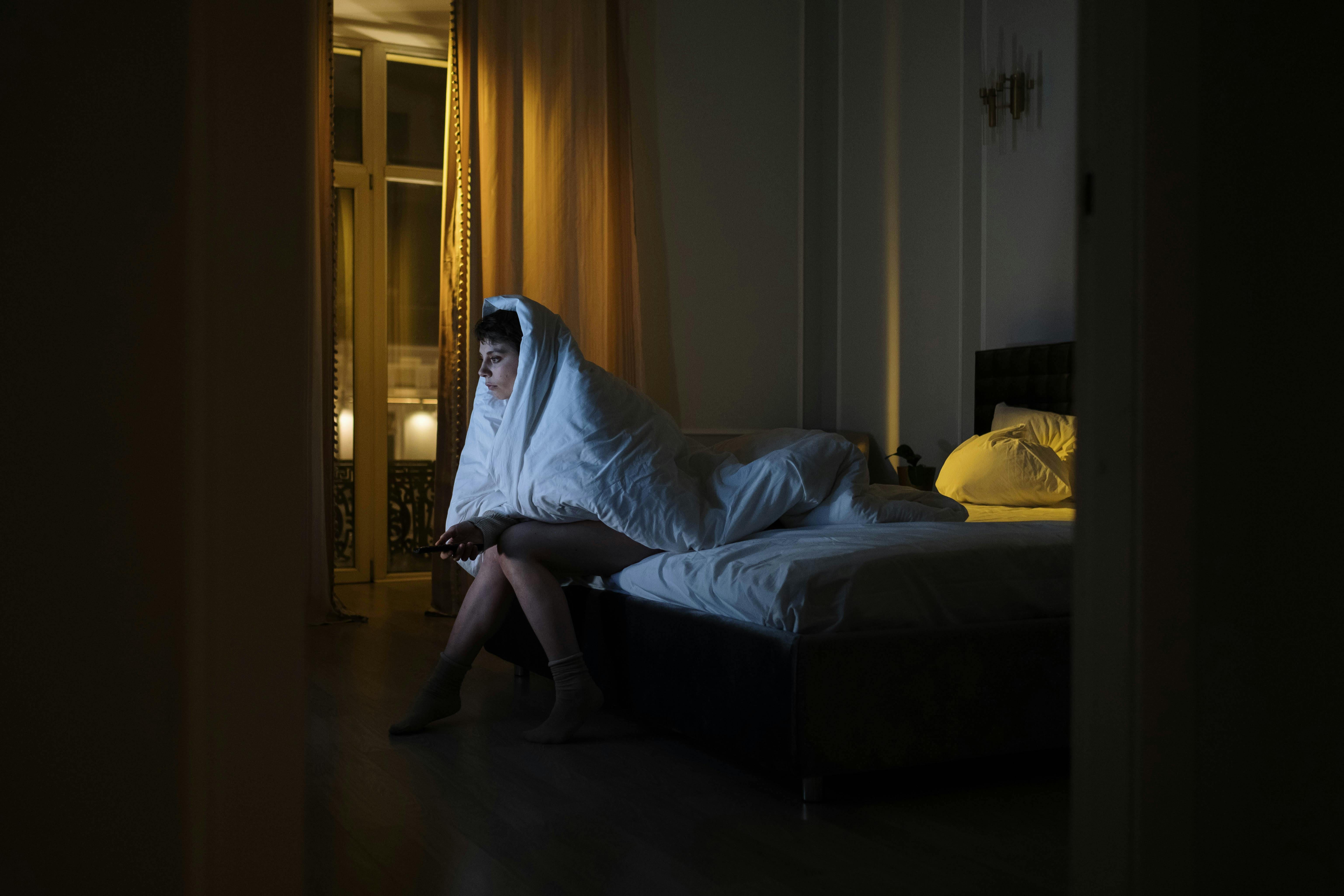
Spaces dictate your behaviour more than you are aware of it. Notice how you feel and behave differently in a playground versus an art gallery versus your doctor’s waiting room? The environment you sleep in has an impact on whether and how you rest.
When done right, your bedroom works as a cue. A familiar setting, clean decluttered space, muted colours and dim lights reduce sensory stress, making it easy to unwind and fall asleep.
Whether you are in a hotel room or in your own home, tending to your space is the first step to fixing your sleep.
Take a look around your bedroom and ask yourself:
Is my bedroom doubling up as home office/home theatre/laundry room? What changes would make this space more calming, more favourable to rest?
To get you started:
Less is more.
Embrace Japanese minimalism. Survey every item—artworks, books, mementoes—and strip away anything that is not uplifting. In my case this has meant folding away the laundry or letting it dry in the living room overnight!Banish work from your bedroom.
If your bedroom doubles up as your office, just tuck away your laptop and folders each evening and leave a clean desk. Avoid any visual reminders of unfinished business.Keep evening lighting soft and subdued.
Smart bulbs with night/circadian mode / Warm-white or amber LED bulbs (≤ 2,700 K) do the job! Darkness stimulates melatonin production—the sleep hormone. If you have bright lights coming in from the street, just like I do, opt for opaque black out curtains.Keep it cool.
Between 18 °C and 22 °C is the ideal range, according to studies. Turn down the heating in winter and air your bedroom well in summer.Opt for an analogue alarm clock.
No reason then, to glance at your mails before bed or if you wake up in the middle of the night.

Tweaking this when you travel:
Bring a light filtering sleep mask.
A well-fitting, contoured sleep mask instantly creates darkness, signalling to your brain that it’s time to wind down. I’ve heard good things about the Manta Sleep Masks.
Pack an essential oil or a pillow mist.
Aromas like lavender or cedar wood will help you relax, regulate your mood and anxiety.Keep your evening attire consistent.
Change into the same pyjamas or loungewear you use at home. I’d say go ahead and pack your own comforter (a shawl, a pillow case...) Bringing with you, what you associate with bedtime will help bridge the gap between hotel anonymity and your personal comfort.Take the time to unpack and settle in.
Unpacking the basics (toiletries, your outfit for the next day …) always makes me feel more grounded and less like a nomad living out of a suit case. Tuck away your laptop and dirty laundry behind a closed cabinet door—out of sight, out of mind.Schedule in some wind down activity.
A walk, a warm shower and even 10 minutes of gentle Yoga in bed will go a long way in priming your brain and your body for sleep.
None of these adjustments cost much!
Tell me what has worked for you and what it is that you still struggle with specially when travelling. Drop it in the comments below!
With Love,
Gayatri
I am a Sleep & Holistic Health Coach. I help you reclaim restful sleep, vitality and focus.
Looking for sustainable sleep transformation? Let’s talk!
Book a 30 minute call with me.
Read more about me, my journey and my approach.